



Five Baseball Hall of Fame Candidates Facing “Ballot Purgatory”
In the Baseball Hall of Fame voting process, receiving more than 5% of the vote allows a candidate to remain on the ballot for up to 10 years. While this system offers players multiple opportunities for consideration, history shows that many candidates spend their entire eligibility period on the ballot without ever reaching induction. This situation is often referred to as “ballot purgatory.”
On the current ballot, five position players appear to be heading toward that uncertain territory: Bobby Abreu, Jimmy Rollins, Dustin Pedroia, David Wright, and Torii Hunter. Each enjoyed an accomplished MLB career, yet all face significant challenges in gaining enough voter momentum to reach Cooperstown.
Below is an overview of their Hall of Fame cases, based on performance data, career value, and voting trends.
Bobby Abreu
Last vote: 19.5% | Ballot year: 7
Bobby Abreu’s candidacy has steadily gained traction, making him the strongest statistical case among this group. Over an 18-season career, Abreu produced a .291/.395/.475 slash line (128 OPS+), combining elite on-base skills with power and baserunning value.
Career totals include:
-
2,470 hits
-
1,476 walks
-
574 doubles
-
288 home runs
-
400 stolen bases
Advanced metrics support his case. Abreu ranks 21st all-time among right fielders in WAR, ahead of several inducted Hall of Famers. His profile reflects one of the most well-rounded offensive careers of his era. However, with only a few ballot years remaining, he will likely need a significant jump in support to become a realistic Hall of Fame candidate.
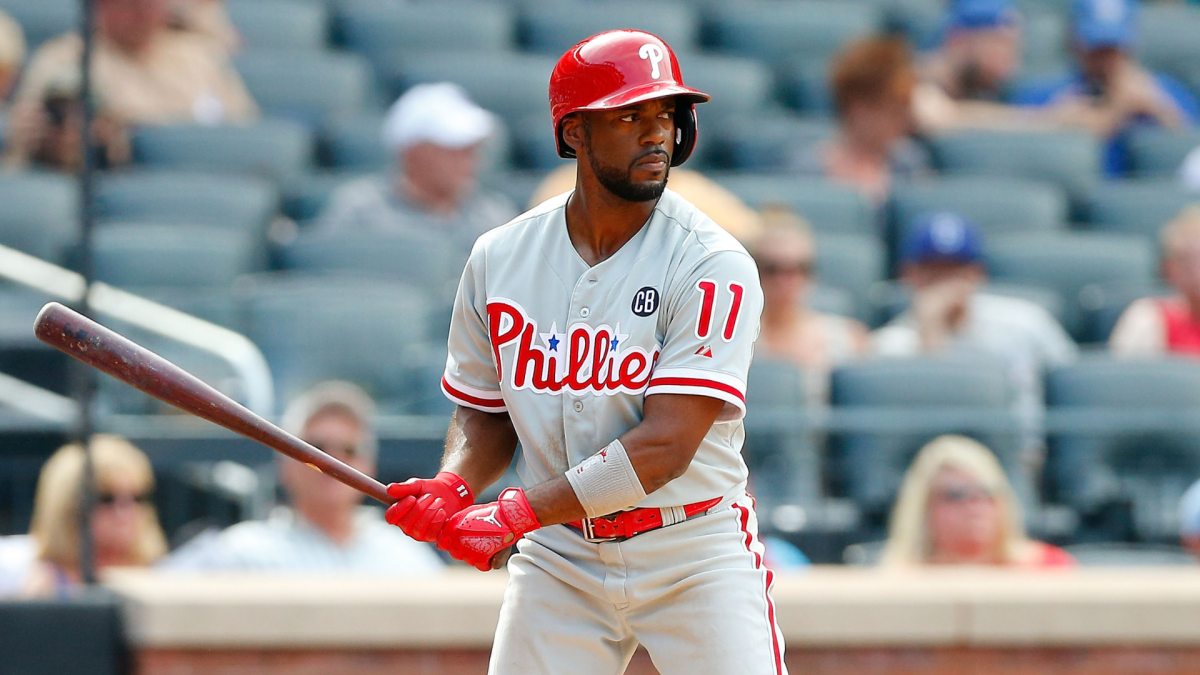
Jimmy Rollins
Last vote: 18.0% | Ballot year: 5
Jimmy Rollins is best remembered as a cornerstone of the Philadelphia Phillies’ most successful era, highlighted by a World Series title and multiple division championships. While his traditional rate stats are modest (.264/.324/.418), his value extended beyond the box score.
Career highlights include:
-
2,455 hits
-
511 doubles
-
231 home runs
-
470 stolen bases
-
Elite defense at shortstop
Rollins ranks 27th all-time in WAR among shortstops, a position already well represented in the Hall of Fame. Although his leadership, durability, and all-around skill set were exceptional, historical voting patterns suggest his statistical résumé falls short of the typical Hall of Fame standard.
Dustin Pedroia
Last vote: 11.9% | Ballot year: 2
Dustin Pedroia’s Hall of Fame case is heavily influenced by injuries that shortened his career. At his peak, Pedroia was one of the most complete second basemen in baseball, combining contact hitting, defense, and leadership.
Career achievements include:
-
.299/.365/.439 slash line (113 OPS+)
-
Rookie of the Year and MVP awards
-
Four Gold Gloves
-
Two World Series championships
Despite limited career totals, Pedroia’s 51.8 WAR ranks 23rd among second basemen, and advanced evaluation systems such as JAWS place him ahead of several inducted players. His candidacy depends largely on whether voters prioritize peak performance over longevity.
David Wright
Last vote: 8.1% | Ballot year: 3
David Wright’s career trajectory once mirrored that of future Hall of Famers before injuries drastically reduced his playing time. Spending his entire career with the New York Mets, Wright posted a .296/.376/.491 slash line (133 OPS+) and was widely viewed as one of the game’s premier third basemen during his prime.
Career totals include:
-
242 home runs
-
390 doubles
-
Nearly 1,000 RBIs and runs scored
Wright’s 49.1 WAR ranks 29th among third basemen, placing him outside the traditional Hall of Fame threshold. While his peak years were outstanding, shortened longevity has made his induction path increasingly difficult.
Torii Hunter
Last vote: 5.1% | Ballot year: 6
Torii Hunter narrowly remained on the ballot last year and faces the most immediate risk of falling below the 5% cutoff. Known primarily for his defensive excellence, Hunter earned nine Gold Gloves and built a reputation as one of the premier center field defenders of his generation.
Offensive career totals include:
-
2,452 hits
-
353 home runs
-
1,391 RBIs
However, advanced metrics place Hunter 35th among center fielders in WAR, a position with limited Hall of Fame representation. Without a dramatic shift in voting trends, his candidacy is unlikely to advance further.
Industry Perspective
As baseball analytics and historical evaluation standards continue to evolve, discussions around Hall of Fame voting increasingly reflect how performance data, positional value, and career longevity are interpreted over time. From advanced metrics like WAR and JAWS to contextual factors such as team success and defensive impact, modern baseball analysis has become more data-driven than ever.
For organizations working closely with teams, leagues, and baseball communities worldwide, these conversations offer valuable insight into how the game continues to develop—both on and off the field.
Conclusion
All five players left a significant mark on Major League Baseball, whether through consistent production, elite defense, leadership, or championship success. However, Hall of Fame voting history shows that steady but moderate support rarely leads to induction.
As the ballot years continue to pass, these players serve as examples of how career context, longevity, and evolving evaluation standards play a crucial role in determining baseball immortality.
About Doosansports
Doosansports is a professional custom sportswear manufacturer specializing in baseball, ice hockey, rugby, and team apparel. Working closely with clubs, academies, and organizations worldwide, Doosansports combines performance fabrics, advanced production techniques, and data-informed design to support teams at every level of the game.
Learn more about our custom baseball uniforms and team solutions at:
👉 https://www.doosansports.com/baseball/